


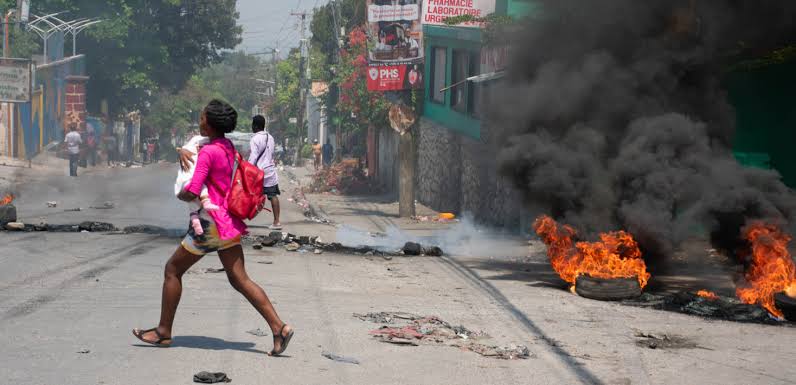
Port-au-Prince, 30 January 2026: According to the United Nations Integrated Office in Haiti (BINUH), during the fourth quarter of 2025 (October–December), at least 1,523 people were killed and 806 others injured. Over the whole of 2025, these figures bring the number of people killed to more than 5,915 and those injured to 2,708.
As in previous quarters, gangs were unable to expand their territorial control in the Port-au-Prince metropolitan area, notably due to operations conducted by law enforcement. However, these gangs were responsible for 32 per cent of the victims. In areas under their control in Port-au-Prince, they continued to commit serious human rights abuses, including targeted killings, kidnappings, extortion and the destruction of property, as well as the trafficking of children for the purposes of exploitation and participation in criminal activities.
Their members also continued their tactic of using sexual violence, particularly gang rape, as a weapon against the population, whether during home intrusions or while victims were moving about in the streets. During the last quarter of 2025, the United Nations Monitoring, Analysis and Reporting Mechanism (MARA) documented more than 301 victims of sexual violence, mainly women and girls, some of whom were barely ten years old.
In rural areas on the outskirts of the capital, such as in the departments of Artibonite and Centre, gangs carried out indiscriminate attacks against several localities in order to consolidate and expand their territorial control. These raids particularly targeted farming communities and their agricultural assets, triggering new population movements, weakening the local economy and increasing humanitarian and protection needs.
Alongside this gang violence, BINUH estimates that 6 per cent of killings and injuries are attributable to self-defence groups and to members of the population participating in the “Bwa Kalé” movement, targeting gang members and people suspected of collaborating with them.
Finally, more than 62 per cent of the people killed or injured during the quarter were affected during law enforcement operations, in some cases supported by a private military company using drones. Among all those killed and injured in drone strikes, 32 were members of the population, including two young girls.
The report also highlights the persistence of allegations of summary executions involving members of the police. At least 58 people are believed to have been victims of such executions, which would bring the total to more than 222 people for the year 2025. The Inspectorate General of the Haitian National Police has been informed of all these cases.
“Faced with human rights abuses and violations, we welcome the continued efforts to strengthen the fight against impunity, led by the Haitian authorities with the support of the United Nations, despite persistent constraints in terms of resources, capacity and the functioning of the judicial system,” said Carlos Ruiz Massieu, Special Representative of the UN Secretary-General and Head of BINUH.
In addition to the assistance provided for the establishment of specialised judicial hubs, particular attention was paid to the situation of juvenile detainees in conflict with the law. BINUH therefore supported the judicial authorities in organising several hearings in Port-au-Prince, Les Cayes and Gonaïves, which led to the release of more than a dozen children deprived of their liberty.
In view of the seriousness of the human rights situation, the report underscores the urgency of strengthening the protection of the population, ensuring that all operations by national and international security forces are conducted in strict compliance with international human rights law, and accelerating accountability mechanisms, including against State agents allegedly responsible for violations. The report also calls on the international community to keep Haiti on the international agenda and to provide adequate support in order to respond to the scale of the humanitarian and protection crisis.